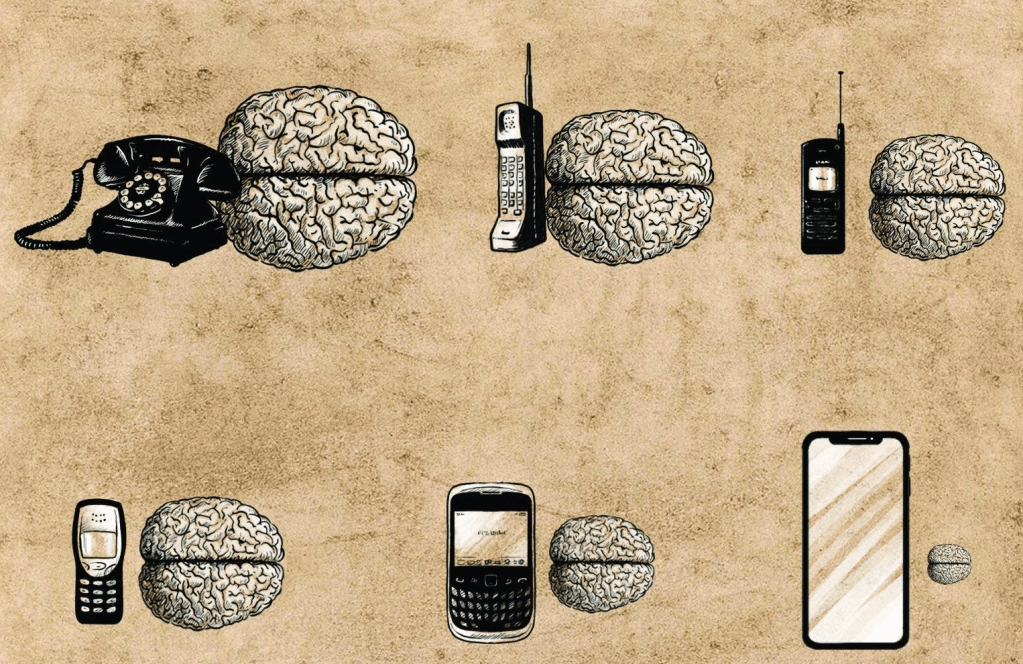
The concept of privacy has been a critical topic of discussion since before the founding of this country, but the Third, Fourth, and Fifth Amendments of the Bill of Right established and addressed privacy as a protection against government intrusion. At the end of the nineteenth century, the discussion on the “right of privacy” from fellow private citizens began, as the “right to let be”. [1] Now in the current technological age with algorithms being used by Big Tech, there is a new discussion brewing regarding the corporate use of private information. Privacy is considered as a fundamental human right, and its importance is highlighted by the fact that it is included in the Constitution, and various national, international and state laws.
The argument of this essay is that the Right of Privacy is dependent on the Freedom of Conscience and Agency. However, in the current technological landscape, where most people’s Consciousness is “plugged in,” their realities, and consciousness are being shaped and manufactured by algorithms, hindering Freedom of Conscience. People’s inability to unplug is threatening the foundation of privacy. The solution to this problem is self-regulation and personal habits through mindfulness, such as limiting time online, unplugging for one day a week, and enjoying the great outdoors without the distraction of technology.
In this essay, I will explore the origins of the term Freedom of Conscience through its religious and philosophical roots, and how it influenced the
Founding Fathers. I will also examine how the internet, the media and our consumption of information through these mediums have changed the way we process information, diminishing people’s agency and Freedom of Conscience. I will then discuss of some of the consequences of this phenomenon. Finally, I will propose individuals actions that can be taken to reclaim agency, Freedom of Conscience, and perhaps some privacy.
Furthermore, a thread that runs throughout this essay is that privacy as a concept and right depends on the Freedom of Conscience. Freedom of Conscience, in turn, depends on one’s habits, which shape the conscience based on what the subconscious feeds the consciousness through habits. It is Essential that people seek their own method or habits of unplugging instead of relying on the state or government as nannies for Big Tech.
The Limbo of Privacy’s Definition
Privacy is an inherently difficult term to define since people cannot agree on its concrete, and tangible effects. Privacy is an abstract concept that refers to where people believe there should be a protected boundary that shields individuals or groups from physical, emotional, spiritual, religious, intellectual, other concrete and or seemingly immaterial harms or damages caused by private individuals, companies, corporations, state actors, state agencies, national or local governments and or Foreign Governments.
The Subliminal, Agency and Freedom of Conscience Loop (the fabric of the thread weaving this essay)
Freedom of Conscience is dependent on agency, agency is dependent on what one actively does. What one actively does is dependent on what one actively believes, which is dependent on what one observes or listens to actively or passively. Therefore, if one does not control what they see or listen to, then they are not in control of what they believe, what they actively do, their agency, or Freedom of Conscience. All of these are in a loop, and to be in control of oneself all of these features need to be tended to in order to be a free person in control of their conscience that can make relatively unhindered moral decisions for oneself. If individuals do not have agency or control of their conscience the arguments for paternalist, authoritarian, or even fascists policies become very appealing. It may seem necessary for a governing body to make moral decisions for individuals if they are not in control of their actions, agency or Freedom of Conscience. Thereby, Freedom of Conscience is the foundation of individualism, and without it, the moral fabric for individual freedoms and rights begins to unravel for populists to appeal to the marginalized and manipulate those without agency into voting in a fascist dictator.
The History of Freedom of Conscience
These United States of America were aimed at achieving principles such as liberty, privacy, freedom, Human Rights etc. However, these principles are based on an ontological philosophy that is deeper than any of those particular principles which is the “Freedom of Conscience” in order to serve a higher being. Freedom on Conscience is an inherently religious idea, meant to push man above the lower pleasures and to be more than beings that exist and deduce reality based on their feelings.
The right to privacy has its roots in the ideas of various philosophers and thinkers, such as John Locke and St. Aquinas, who believed that individuals’ have certain inherent rights that are essential to serving God. According to this Philosophy, individuals must have the freedom to act according to their own will including the freedom to abstain from religious practice if they so choose.
Prior to the establishment of the Constitution in 1787, Secular governments were not common. Most leaders were either religious or influenced by them, and religion played a significant role in the spread of belief and practices. For instance, religions such as Christianity, Islam, Hinduism and Buddhism spread rapidly due to the conversion of kings, monarchs, leaders, and councils to the new religion. Some religions encouraged missionary work and evangelism, while others believed in leading by example to persuade others to convert. However, for over a millennium, religions like Christianity and Islam viewed other religions as idolatrous or inferior and often persecuted these religions followers as outsiders, while treating them as second-class citizens subject to extra taxes and segregation.[2][3]
The idea of free will in regard to one’s faith was almost prophetic in the 5th century when Augustine of Hippo (aka St. Augustine) wrote about it in his books On Free Choice of Will[4] and The City of God. In the former, he argued that free will is a gift from God that enables people. To choose between good and evil.[5] In the latter, he describes the need for an earthly city and heavenly city, which was meant as a plea for people to stay in the “City of God”.[6] This “City” later got interpreted by philosophers as the religious foundation for a separation of church and state, since political peace was seen a moral neutral insofar as it is a common goal between Christians and non-Christians. However, Augustine was a fierce critic of the Roman Republic due to its religious polytheism, perceived lack of morality and his belief that justice could not be served through politics alone.[7] This underscores the importance of additional moral, philosophical, and religious writers in the development of the modern sense of free will, which was later enshrined as the Freedom of Conscience depicted by the Founding Fathers.[8]
Over the Millenia following St. Augustine’s’ works, influential thinkers like Martin Luther, Roger William, St. Aquinas and John Locke built upon his ideas, leading to a shift in the tenor of free will that was more palatable to the Founding Fathers.
Martin Luther focused Conscience of Freedom (“the inner being of conscientia in the primeval verbum”[9]), which pertains to the way individuals represent their knowledge of self in regard to their initial thoughts, particularly in acting on good and/or evil. For Luther, the Freedom of Conscience was only meaningful if it prevented a governing body (in his case, the Catholic Church)[10] from compelling individual to take specific actions. [11]
Similarly, Roger Williams, often celebrated as the great hero of liberty of conscience, believed that religion could be defined under his notion of conscience (often used as a synonym for religion), which he described as “a perswasion fixed in the minde and heart of a man, which enforceth him to judge … and to doe so and so, with respect to God, his worship, ác.”[12] Williams argued that the basic principles of morality were the product of natural reason or conscience and were known by all persons which that enabled him to distinguish them from religious beliefs, which are the product of revelation.[13] He also believed that a successful society consists solely of Christians, limiting his authority as a controlling figure.[14] Nevertheless, Williams was a crucial influence on the Founding Fathers, as he founded Rhode Island, became an icon for (Christian) religious freedoms and established the first Baptist church in America.[15]
The Main Constitutional Influence –the Concept of Conscience
John Locke advocated for religious freedoms and outlines three main reasons for religious toleration in his Letters Concerning Toleration (1689-1692).[16] The first reason he listed was that “earthly judges, the state in particular, and human beings generally, cannot dependably evaluate the truth-claims of competing religious standpoints”. This formed the basis of his theory of Freedom of Conscience, which asserts that individuals should not grant the state authority over spiritual matters because objective truth cannot be determined by a governing body.[17]
Locke’s theory of Freedom of Conscience is crucial in preventing the government from policing what truth is. For instance, recent DHS document reveal attempts by the Executive Branch of the United States to decide what constitutes misinformation/disinformation is. This is an example of government over stepping its bounds.[18][19] The government should not be responsible for determining what is Misinformation or Disinformation, because government agencies will conflate the two to achieve their aims.[20] The Disinformation Governance Board faced backlash and was ultimately disbanded because its purpose was misunderstood, and it was ill-equipped to stop alleged disinformation about its mission.[21] The Board’s name suggested the DHS was already doing exactly what it claimed to be preventing name suggested exactly what the DHS was already doing.[22]
By Contrast for St. Aquinas, Conscience was not a capability, power or a physically distinct entity; rather, it was a specific function, namely, the application of knowledge.[23] Aquinas identified three main ways of defining Conscience:
“For conscience, according to the very nature of the word, implies the relation of knowledge to something: for conscience may be resolved into ‘cum alio scientia,’ i.e. knowledge applied to an individual case. But the application of knowledge to something is done by some act. Wherefore from this explanation of the name it is clear that conscience is an act… conscience is said to witness. In another way, so far as through the conscience we judge that something should be done or not done; and in this sense, conscience is said to incite or to bind. In the third way, so far as by conscience we judge that something done is well done or ill done, and in this sense conscience is said to excuse, accuse, or torment.”[24]
However, Aquinas objected to the third definition, arguing that habits play a crucial role in forming conscience and influencing our decision-making. [25] This objection highlights the concept of agency, as habits can limit our Freedom of Conscience in situations where our conscience is already influenced by habits.
The Current Technological Landscape — How the Shallows Immediate Access has Changed Our Brains
Nicholas Carr explains the thought process behind the creation of Google. Carr states “[Larry Page] realized that the links on web pages are analogous to the citation in academic papers”. Both are signifiers of value. In the same way when a person’s web page links to someone else’s page, she is saying that she thinks that other page is more important.[26] This is how most of legacy media works. They cite someone else, who then cites someone, who cited someone else and if you take the time to go through the rabbit hole the source is usually a paraphrase of what someone heard someone else saying. By the time news gets to somewhere like Fox News, CNN, MSNBC, the Washington Post, New York Times or other legacy media organizations. They can usually point to half a dozen subsidiaries, affiliates, or individuals that cited it first.[27] As a result, our brains now use faulty modes of relating to information as having authority[28] since hyperlinking in an article penalizes the reader.[29]
Anthropologists usefully defines a “tool” as an artifact used to make other artifacts. Therefore, objects like cars, houses, or clothing are not usually tools. Modern tools have included things like 3-D printers, garden tools and hammers. When we think of things like computers or smartphones people who use them for artistic expression, building networks or to program machines can call them modern technological tools. The question then posed is if someone just uses their phone for media, entertainment, or a way to kill time. The Algorithm adjusts to you but does the adjustment it causes on one’s brain thereby make the medium the tool and one’s mind an artifact?
This bring us to the issue of the medium of information that is changing the way people think. J.Z. Young discusses that “for the medieval type of brain. . . making true statements depended on fitting sensory experience with the symbols of religion.”[30] The introduction of the letter-press was said to have allowed people to compare their thoughts and experiences beyond religious precepts, whether embedded in symbols or voiced by the clergy, and instead, compare one’s thoughts and experiences with other stories. However, with the advent of the internet, smartphones and streaming services, the medium through which we process information has changed once again. Rather than continuing to evolve human reasoning, these technologies have led to a form of devolution, where people’s experiences and thoughts are shaped by the algorithms of the platforms they use; leading to a lack of critical thinking and dependence on information presented to them. As a result, the medium of information is changing the way people think in ways that were not anticipated by earlier forms of media.
The Medium
In Understanding Media: The Extensions of Man, Marshall McLuhan proposes that the media, not the content that they carry, should be the focus of study.[31] He suggests that the medium affects the society in which it plays a role mainly by the characteristics of the medium rather than the content. As many great works, it is talked about more than read. He is coined as saying “the Medium is the message”. McLuhan understood that when new mediums come along people naturally get caught up in the information—the “content”—it carries. They care about the news in the newspaper, the music on the radio, the shows on the TV (streaming platforms), the words spoken on the far end of the phone line. Now we have to confront news updates as phone alerts, music individually streamed, TV show options catered to the likings of the viewer, conversations via the monologue of a social media posts, meetings via a Zoom screens, and short abbreviated messages to our loved ones.
When individuals debate the effects of the medium, whether they are enthusiasts or skeptics, they often focus on the content. Tiktok, Instagram, Facebook, Google and other media platforms are just the latest topics in this ongoing context debate. However, McLuhan observed that in the long term, the content of a medium matters less than the medium itself, which can shape how we think and act. As our window into the world (and into ourselves, a popular medium molds what we see and how we perceive it). With enough usage, it can even alter who we are as individuals and as a society. According to McLuhan “[T]he effects of technology do not occur at the level of opinion or concepts,” but by gradually and subconsciously altering our patterned perception without any resistance. The showman embellishes steadily and without any resistance. The showman embellishes to make a point, but the point remains the same. Through the mediums, media works its magic, or mischief, on our nervous system.
Our fixation on the substance of a medium can obscure the profound impacts it has on us. Rather than recognizing the internal shifts that occur, we become enamored or disturbed by the content, overlooking the underlying effects. Eventually we convince ourselves that the technology itself is inconsequential, and it’s our utilization of it that holds significance. This notion, though misleading, provides comfort by implying that we are in command. The technology is a mere instrument, lifeless until we wield it and lifeless again once we put it away. However, this is no longer true as anxiety and FOMO (fear of missing out) are becoming attached to the states of mind we have when we unplug. Nevertheless, individuals who are cautious of the ever-expanding influence of the internet seldom allow their enjoyment of it to be impeded by their awareness.
This is why getting angry at Big tech for the information that they are able to gather about us seems rather silly. There’s only a problem with the content they collect. But restricting Big Tech is not likely to change the medium of how we consume information and entertainment, or the fact that the information we do not wanted gathered may be “volunteered” through this medium in some other way.
The Brain Effect
There is an argument that the internet, with its ability to provide various types of sensory and cognitive stimuli, has more than just potential to rapidly and thoroughly restructure our cognitive processes. This is because the internet provides each kind of sensory and cognitive stimuli that produces rapid and potent modification in brain circuitry. [32] The repetitive, intense, interactive, and addictive qualities of these stimuli make them highly effective in modifying brain circuitry. The World Health Organization now has now classified internet-use disorder (IUD) and internet gaming disorder/internet addiction (IGD) in the International Classification of Diseases 11th revision. [33] (ICD-11). Neurologically, addiction is characterized by overall network changes in the frontostriatal[34] and frontocingulate[35] circuits of the brain. [36] Additionally, research has shown that digital media use is associated with significantly lower scores in behavioral measure for executive function.[37]
Research examining the impact of different media on intelligence and learning abilities, has shown that each medium promotes certain cognitive skills while hindering others. With the widespread use of the internet and screen-based technologies, visual- spatial abilities have become more advance, allowing individuals to visualize object with greater precision. However, this strength comes at the expense of reduced abilities in deep processing, which is essential for mindful knowledge acquisition, critical thinking, inductive analysis, imagination, and reflection. [38] This is where Agency and Freedom of Conscience begin to erode.
In his famous 2005 speech, David Foster Wallace emphasized “Learning how to think really means learning how to exercise control over how and what you think”. He believed that conscious awareness allows us to choose what we pay attention to and construct meaning from our experiences. To lose that control is to feel a sense of loss.[39] Unfortunately, Wallace’s words became all the more poignant when he took his own life two and a half years later. It is a powerful reminder that we must not relinquish control over our attention without recognizing the potential consequences.
This is the current state of our society. People often rely on headlines and catchphrases for information on a given topic, overlooking the depth and complexity of the issues that affect their daily lives. With the prevalence of the internet over the past two decades, discussing complex issues has become nearly impossible for many individuals. When people encounter information that challenges their existing beliefs, they must reorganize their thought processes. However, with the ease of accessing counterarguments, it becomes simpler to resort to heuristic ideologues that we see in the mediums we consume the most. This is especially problematic when someone challenges our views on a topic, as we often cling tightly to our beliefs. We then seek out the very medium that causes our problems in order to reinforce our beliefs.
Plugging in to unplug
People now use the stressors to destress themselves.
The Power of the Unconscious
Based on this, modern technology has actually made western society more primitive than ever. For the average American, prior to 1920, work was either in a factory or in a field as a farmer, or some sort of blue-collar work.[40] This meant that people usually received their news via the spoken word, the radio or newspaper, if you knew how to read. But since there was not instant access to information when people heard news, they had time to process it, think about the source, perhaps think about what information they are missing in order to have a more informed opinion, at the very least most people would discuss it with their family, friends and their community to get a consensus. But because individuals had to deal with other people in their proximity. Political or moral discussions necessitated being more civil and polite. There are counters such as the civil rights movement. But those were movements with clearly articulated goals. (which later got hijacked by extremists).
However, in the modern age where most people mindlessly scroll through social media, individuals are most likely not actively in control of what they see or listen too. If someone even consciously processes it, it is very brief. If you are not in control of what your brain is processing or how your brain is processing information, then the likelihood that you know what or why you are actively doing something is very low.
The senses can handle about 11 million bits per second, while reading silently they handle 45 bits per second, reading aloud is 30-bit p/s and multiplication of tasks is 12 bit p/s so the processing power of the unconscious mind is 200,000 times that of consciousness.[41] Many people now act instinctually based on an emotion they unconsciously processed that someone else had while they were mindlessly scrolling. Thereby, agency for many people has been lost since one is not truly acting out of one’s own volition but based on an input that is unrecallable.
Yet, when one acts in a certain way that could be made sense of, it is easier to associate that with one’s true nature than to strip down the process by which one learned that behavior. Thus, if what one is viewing affects their actions and then diminishes one’s desire to separate when they are being influenced, from their own agency, then the knowledge(conscience) of self is gone.
Researcher John A Bargh speaks about “behavior-concept priming” people have a working memory with multiple components, summarizing the finding that within working memory, representation of one’s intentions (accessible to conscious awareness) are stored in a different location and structure from the representations used to guide action (not accessible) is of paramount importance to an understanding of the mechanisms underlying priming effects in social psychology. The habits that are forming one’s current being are not with in the freedom of conscience, they are abstracts from the medium and the information being consumed in the short hand form.[42]
Freedom of conscience is dependent on agency, agency is dependent on what you do actively. What you do actively is dependent on what one actively believes. What one actively believes is dependent on what one sees or listens to active/inactively. Do you see where this loop is being disrupted?
If you Don’t Reject it as “False”, it Eventually becomes More “True”
I strongly suggest everyone reads The shallows by Nicholos Carr. I read it [7] years ago and it fundamentally changed how I interact with any medium. There is a part in the book where Carr talks about what it means to continue to consume a piece of information, whether that be a paper, a book, movie, TV show, or news show. In order to actively stay engaged in something that is conveying information, you usually have to think of it as true, false or could be true. Otherwise what you are seeing is utter nonsense because the dots that made it cognizable are not connecting and therefore it is gibberish. Individuals have the ability to watch/consume something that they believe is false. The caveat is that in their head, via a physiological response, or at least verbally they are thinking “that’s wrong”, “that’s false”, “that could never happen” or even laughing at the absurdity. Thereby, most people have trouble watching stuff that their brain categories as false.
But there is a strange phenomenon that is as old as time: telling stories that could be true, even if not in a literal sense, can transcends all imagined barriers. We call them myths, legends, or even biblical stories. What Hollywood, legacy media, the government, and corporations have been attempting to do with the new mediums is streamline what could be considered modern myths. For instance, because of representation in media and commercials Americans think minority groups are larger than they actually are.[43][44]
The argument is that willingness to watch and accept certain films, or media as being a proper representation of an event, zeitgeist, or movement shifts the could be true, to most likely true. Now if other authority figures (such as celebrities, or academics) emulate that same sentiment or if that piece of work is disseminated in the more bite size medium. These repetitions alter the unconscious mind. To me if I hear someone say they have a favorite movie what I hear is that they have been partially programmed by the movie. I cannot watch a movie I have seen in the past three years or I am bored and quoting every other line. There is no movie created by a group of self-aggrandizing writers that is as fundamentally true as biblical stories or other historical myths that have survived genocides, famines, wars and mother nature’s brutality.
Note before the Solutions(worthwhile trade-offs)
With all this said it may seem easier to just be a defeatist or want to ignore what has already been created since these technologies have become such integral parts of our lives. There is this struggle playing out in modern society where people are either willing to admit that many people have lost their agency; or by contrast, only willing to say people should pick themselves up since agency is purely a choice.
The issue with the former group is that if people are capable of losing their agency and if the only manner that these people can get their agency back is through government intervention. Then the issues I see is how can you trust the person who says they are reallocating the agency, if they already believe that certain groups can be forced or convinced to act and live lives that are not in their best interest, what is to stop them (the authority reallocating “agency”) from just enforcing their own agenda on those without agency. Also, if you believe that others have lost their agency how are you so sure that you have agency and are not the foot soldiers for someone’s agenda. Therefore, if the lack of agency for certain people groups can be sourced to certain governmental or societal systems what makes a person belonging to this group believe some new governmental policy would actually make this better and not cause a South African post-Apartheid type of shift in agency.[45]
In regards, to the latter, the issue is that most individuals who say this are either in the minority that is capable of having high agency (nature) or were around people who prioritize high agency (nurture). Furthermore, most of their arguments hinge on agency as a governmental shift in policy as unequal benefits being given to another people group. Meanwhile, when there are government handouts or policies that positively affect or help, the people group they belong too, they will take it, yet they complain about government expansion and welfare programs.
Both sides have been hamstringing themselves and have been baited by the candidates who offer the catchphrase of the proper ideologue that provides an incentive to vote for that party. Meanwhile the individuals are trading away their agency for marginal benefits.
For these reasons I am vehemently against government intervention into the modern space of technology and privacy. With the way politics works in this Democratic Republic any law that is drafted with the alleged intention of giving rights to individuals as to their harvested data by the Big Tech. Is not likely to work out. Big Tech has laid the seed on their soil and opened the gates. We as consumers via the medium have watered and been the sunlight to grow these seeds into fruit. So in a sense these data points are the fruit of our labor but we have been on their property the entire time.
There are arguments that the dirt is government subsidized, but in the current landscape new policies are more likely than not to have loopholes for these corporations and or give these companies a competitive edge; since most of these politicians get campaign money from these companies and regurgitate the catchphrases that bait people into believing one thing while these individuals do otherwise. Most bad laws on the books are a result of government half assing a law that was originally intended to stop a whole practice and ended up giving an advantage to the main villains it was meant to hinder. As a result, the best way to mitigate at least in the short to intermediate term is get more people their agency back by showing them how these mediums are truly pigeon holing their entire mode of thinking and feeling which highjacks their agency and Freedom of Conscience. Thereby, the Privacy issue is a symptom of content in the medium not the disease of the mediums themselves.
Solutions (or prescriptive trading rambles)
These are exercises which can help people. But these exercises lean more towards anecdotal evidence since there does not seem be a financial profit that can be made from these mental workouts. However, just like most exercises consistency over a long period of time is imperative to growth and is more important than merely going hardcore at it occasionally. I like the SMART way of achieving a Specific, Measurable, Achievable, Relevant and Time-Bound goal. But by no means is this meant to be exhaustive:
(1) Do not use your phone while in a discussion with someone who has opposing views to yourself; (2) go a double-digit amount of hours awake without having internet access; (3) have long form discussions with friends or family, where the rules of engagement are no technology[46][47][48]; (4) set a time in which you will not use your phone; (5) going on a camping trip to somewhere you do not have service for a few days bi-annually;(6) Exercising on a regular basis; (7) Reading paper books; (8) learning about belief systems other than your own from a person who believes it; (9) having mentors, wholistic and or general/specific goal-oriented one; (10) being aware of the anxiety of unplugging. (11) Prayer/ Mediation/ self-brainwashing.
- (1) Using your phone as described above is a safety blanket.[49] This is a blanket for several reasons, (A) if you can just go back to the same short form medium that created your already confirmed frame of mind you have; then no critical thinking has actually occurred. You are just looping back in. (b)clutching or holding your phone will give you a sense of unjustified security. We all have seen those videos of very highly educated people pulling out their phones to be able to record to convince an audience of something. But the Audience consumes the information through the same medium, so the phone makes the person being filmed perceive the holder as one using an immediate get-out-of-jail-free-card. And the conversation seems like the person not holding the phone is holding the phone bearer hostage.
- (2) This can be anything from turning your phone off, putting it on airplane mode (turning off wifi), putting it somewhere you will not be such as in your car while at home, across the house and turned off. The idea of a shabboth or a rest day truly does miracles for people.[50][51][52] People who do not believe in primordial practices are not worthy of reaching antiquity.
- (3) I personally rarely text people. Thus, when I see loved ones I can sit down and catch up with them. I can have twelve to twenty hour discussions with friends and family because I do not get caught up in oversharing of my life via the short mediums of text messages. There is also research on the benefits of Vocal conversations.[53][54][55]
- It also helps to have people you can play games with, board games and or sports.[56] I know many people like to use online sports but then the medium issue above gets played in as well. You can just set anytime you would like, and you do not have to be social (escape artistry).
- (4)There are methods of not using the internet or its mediums between certain time period. Like not before 10AM and not after 10PM. For some people this unplugging is what is known as deep work.[57]
- (5) Going into the great outdoors where there is nothing but mother nature, your thoughts and physical exertion can be quite a spiritual trip.[58] There are people who go monk, hermit or caveman mode. Some people like to go Glamping. It is all up to the individual and the utility they see in it. Seeing beautiful sights have a magnificent way of humbling the largest of egos, putting things into perspective and assisting the healing process by helping people realize what actually matters.
- (6) Exercising whether its weightlifting, running, calisthenics or playing sports are all great ways of getting in touch with your body, building a mind body connection, and getting rid of Cortisol.[59] Also, it is usually tough to be plugged into a medium when your heart rate is at 85% of capacity. But it can also include activities like scheduled meet ups to play board games, and or socializing.
- (7) There is an overwhelming amount of research on the effects on recall and the memory enhancement of reading a paperback book.[60] Also, even if fiction it will bring you closer to the openminded brains, J.Z. Young claims we had as a result of the reading books. Also, reading books builds empathy.
- (8)This combines (1)-(3) since in order for someone to open up about their deeply held believes they usually want you be present, not on your phone, and expect the conversation to take time. Also, this is a great way to expand your knowledge. Some of the most profound conversations I have had have been with people of different believe systems. Through realizing our similarities and differences, especially through talking through where the similarities diverge into contrasting views and epistemology of those evolutions. These conversations seriously weaken the medium of the internet.
- (9) I have been blessed to have some amazing mentors in my life. I have yet to have found a mentor who I holistically look up to. But I have found academic, professional, spiritual and religious mentors. But these people all suggest alternative ways to grow and achieve certain goals which makes them instrumental to helping me realize that I needed to use different mediums for thinking and conveying myself.
- (10) Part of the issues and the evils that are layered into the algorithms used by media platforms, streaming services and other technologies is that they adjust to us as we use them. Thus, the trap that they set for us are usually built by our own minds, interests, likings and desires. What we are worried about missing when we unplug is based on a dopamine investment we have manufactured on these platforms. But in unplugging on a consistent basis you will realize the world does not end when you stopped paying attention to these medium. Actually, you have more time than ever and the ability to explore new worlds. Another noticeable thing is that these algorithms will attempt to overload individuals with more updates as to make you feel overwhelmed when you plug back in. If this was a boss, a friend or romantic relationship we would see this as abusive. But knowing its tricks is half the battle.
- (11)The power of brainwashing yourself. Meditation is great for slowing down your brain and getting rid of anxiety. Once I started praying Meditation seemed like a waste of time since prayer does the same thing with words of affirmation.
- When I decided I wanted to go to undergrad, I was already 21. The way I programmed myself to get all the necessary tasks done was every 3 months I would create a flash card, and on the flash card I had my daily goals, weekly goals, and seasonal goals. As soon as I would wake up, I would read it and before I would go to sleep I would do the same. What I found is that by doing this, whenever I was bored my brain would drift to completing a task on the list I brainwashed myself into believing was my top priority.
- In recent months and since COVID I have noticed two things, people who out of nowhere will repeat phrases they have seen on social media or Tiktok, and the same with people doing bizarre dances. Recently, I started praying twice daily, I pray in my people’s mother tongue and randomly I would hear words in my head that pertain to certain prayers but it would only be snippets and I could not remember where those specific words were from but it was in my mother tongue. Then later on the same day I would be at an event and hear a prayer that is specific to that day of the week or even year, and then I would be like “oh my subconscious was primed for this event based on my long history of subconsciously internalizing these prayers”. Recently, I realized this is a form of brainwashing but I am fine with it since I believe that it helps me. But I noticed that the medium uses the same force of repetitive motions and sounds to indoctrinate adults and children. My faith has over a millennia of watching the effects of these repetitions that change mood and behavior. I doubt these sayings and dances have the same positive effect, but they will indiscriminately target those same mechanisms through their mediums of disseminating bite size pieces of information that eat away at the subconscious. My fear is that if individuals are not careful their agency will be slowly overtaken to a point beyond restoration.
In conclusion, adopting practices such as those mentioned above can help reduce dependence on the mediums that shape our thought processes. It is widely acknowledged that internet use and phone usage can alter the structure of our brains, and consciously taking steps to limit this influence can be beneficial. However, maintaining agency and Freedom of Conscience requires intentional control over the mediums we consume and what we allow into our subconscious. While the issue of privacy on the internet is important, it is more of a content issue than an issue with the mediums themselves. By consistently unplugging and engaging in practices like mediation, self-reflection and intentional goal setting, individuals can strengthen their ability to think critically and independently. These practices have allowed me to form my beliefs based on my personal experiences, introspection, and hours of relentless and unforgiving silence void of a medium to make up my mind for me. I pray for others to make a similar mindful journeys out of their handheld matrix.
[1] Louis D. Brandeis & Samuel D. Warren II, The Right to Privacy (1890).
[2] https://www.pewresearch.org/religion/2021/06/29/religion-in-india-tolerance-and-segregation/
[3] https://www.britannica.com/topic/Hinduism/Hinduism-under-Islam-11th-19th-century
[4] https://core.ac.uk/download/pdf/236304146.pdf
[5] https://www.anselm.edu/sites/default/files/Documents/Institute%20of%20SA%20Studies/4.5.3.2h_22Brown.pdf
[6] https://plato.stanford.edu/entries/augustine/ ¶8
[7] Id
[8] https://founders.archives.gov/documents/Jefferson/99-01-02-9714
[9] J. HECKEL, Lex Charitatis, ABHANDLUNGEN DER BAYERISCHEN AKADEMIE DER WISSENSCHAFTEN, PHIL-HIsT. K1. N.F. 1953, H. 3, p. 61 n.416; Luther, De Capt. BabyL EccL WA VI, 537, 15.
[10] https://core.ac.uk/download/pdf/303858152.pdf –> Valparaiso University Law Review, Vol. 15, No. 2 [1981], Art. 3 pg 270
[11]https://www.jstor.org/stable/pdf/23559401.pdf?refreqid=excelsior%3A6bacd82773aaa037a34ce46662b6ff79&ab_segments=&origin=&initiator=&acceptTC=1
The Annual of the Society of Christian Ethics , 1988, Vol. 8 (1988), pp. 133-160
Citing . “Letter to Major Endicot, Governour of the Massachusets,” in CW, 4:508 (em phasis added).
[12] 60. “The Bloody Tenent yet more Bloody,” in CW, 4:365; “Letter to John Whipple, Jr.,” in CW, 6:328-29; Morgan, 128-29; William Lee Miller, 183; Little, “Legislating Morality,” 44-45 and “Roger Williams and Separation,” 13-14.
[13] https://www.history.com/topics/religion/roger-williams
[14] https://www.mtsu.edu/first-amendment/article/1231/roger-williams
[15] https://www.loc.gov/item/today-in-history/february-05/
[16] https://academic.oup.com/book/26418/chapter-abstract/194804910?redirectedFrom=fulltext
[17]https://scholarship.law.marquette.edu/mulr/vol101/iss3/4/#:~:text=In%20addition%20to%20defending%20religious,any%20authority%20over%20spiritual%20matters.
[18] https://www.oig.dhs.gov/sites/default/files/assets/2022-08/OIG-22-58-Aug22.pdf
[19] https://www.documentcloud.org/documents/23129270-fb-portal
[20] https://www.documentcloud.org/documents/23131362-june-22-2022-draft-cisa-report
[21] https://www.npr.org/2022/05/21/1100438703/dhs-disinformation-board-nina-jankowicz
[22] The twitter files have more issues regard authenticity and full scope, yet they still do not bode well for governmental influence or policing of Big Tech. Though the meeting of between agencies like the FBI, DHS DOJ and DOD with twitter employees, the medium of dissemination the files (talked about later), and these agencies asking (having influence) versus having backdoor access like they did at Facebook. But all of the twitter files have been compiled at one findable source. https://unga.substack.com/p/twitter-files-1-11-downloads-pdf
[23] Valparaiso University Law Review, Vol. 15, No. 2 [1981], Art. 3 pg 266
[24] ST. THOMAS AQUINAS, SUMMA THEOLOGICA pt. 1, question 79, art. 13
[25] ID.
[26] Pg 152-54 Citing Academy of AChievemnet, “interview: Larry Page.” October 28, 2000, www.achievement.org/autodoc/page/pagoint-1. And John Battele, The Search: How Google and Its Rivals Rewrote the Rules of Business and Transformed Our Culture (New York: Portfolio, 2005), 66-67.The shallows: what the internet is Doing to Our Brains: Chapter on the making of google
[27] https://www.tandfonline.com/doi/full/10.1080/17512786.2022.2133780?casa_token=Iw8KZ5-oopkAAAAA%3ASg0ZGnRSVlQDiXO9ILsyR9u16taj-y0MaB0ANuVQVKNOWGpCWS_GfTxwpAnkye-1hBA_AtgN8REj
[28] https://mediaengagement.org/research/hyperlinks/
[29] https://pdos.csail.mit.edu/~neha/hyperlinks/main-no.html
[30] PG 72 Citing J.Z. Young. Doubt and Certainty in science: a biologists Reflections on the Brain (London: Oxford University Press, 1951), 101
[31] Understanding Media: The Extensions of Man is a 1964 book by Marshall McLuhan,
[32] He Q, Turel O, Bechara A. Brain anatomy alterations associated with Social Networking Site (SNS) addiction. Sci Rep. 2017;7:45064.
[33] https://icd.who.int/browse11/l-m/en
[34] The neural pathways that connect frontal lobe regions with the basal ganglia (striatum) that mediate motor, cognitive, and behavioral functions within the brain
[35] representation of frontocingulate and frontolimbic interactions associated with adaptive forms of reflective, self-focused processing, as well as adaptive regulation of cognition and emotions…suggest that frontocingulate dysfunction contributes to key cognitive and affective abnormalities in depression, including maladaptive ruminative tendencies, difficulty in disengaging from and inhibiting negative information, and emotion dysregulation. https://www.nature.com/articles/npp2010166
[36] https://www.ncbi.nlm.nih.gov/pmc/articles/PMC7366944/
[37] Hutton JS, Dudley J, Horowitz-Kraus T, DeWitt T, Holland SK. Associations between screen-based media use and brain white matter integrity in preschool-aged children. JAMA Pediatr. 2019:e193869. Grosse Wiesmann C, Schreiber J, Singer T, Steinbeis N, Friederici AD. White matter maturation is associated with the emergence of Theory of Mind in early childhood. Nat Commun. 2017;8:14692.
[38] 141 Patricia M Greenfield, “Technology and Informal Education: What Is Taught, What is Learned,” Science, 323, no. 5910 (Janurary 2, 2009):69-71
[39] David Foster Wallance, This is Water: some Thoughts, Delivered on a Significant Occasion, about Living a Compassionate Life (New York: Little Brown, 2009), 54 and 123.
[40] https://stacker.com/careers/most-common-jobs-america-100-years-ago
[41] Ap Dijksterhuis, Henk Aarts, and Pamela K smith 2005 pg 82 https://books.google.co.il/books?hl=en&lr=&id=HgdAqhh7U3gC&oi=fnd&pg=PA77&dq=Ap+Dijksterhuis,+Henk+Aarts,+and+Pamela+K+smith+2005&ots=1Bi0BcBkgC&sig=u4ae4xbAEA5z0tgPiCeqB4mIQto&redir_esc=y#v=onepage&q=Ap%20Dijksterhuis%2C%20Henk%20Aarts%2C%20and%20Pamela%20K%20smith%202005&f=false
[42] 47https://books.google.co.il/books?hl=en&lr=&id=HgdAqhh7U3gC&oi=fnd&pg=PA37&dq=John+A+Bargh+%E2%80%9Cbehavior-concept+priming%E2%80%9D+2005&ots=1Bi0BcBfjE&sig=wQdqDUsvgNHNJLPf-GFHdzwAaxw&redir_esc=y#v=onepage&q&f=false
[43] https://www.scientificamerican.com/article/people-think-minority-groups-are-bigger-than-they-really-are/
[44] https://today.yougov.com/topics/politics/articles-reports/2022/03/15/americans-misestimate-small-subgroups-population
[46] https://anitatoi.com/the-benefits-of-long-conversation/#:~:text=A%20long%20conversation%20allows%20for,are%20listened%20to%20and%20validated.
[47] https://awkwardsilence.com.au/blog/20-benefits-of-conversation
[49] https://journals.sagepub.com/doi/pdf/10.1177/0013916514539755?casa_token=jvAPFxCsOVMAAAAA:TCuSzeJmvu7AeD8thNCsTgsD9NcfN8r-n22KaOKiDK4vDy8Jtlo1jiZDVLxzev2GlBLTlI474dETfW0
[50] https://www.thebanner.org/news/2019/02/the-science-of-sabbath-how-people-are-rediscovering-rest-and-claiming-its-benefits
[51]https://www.researchgate.net/publication/271670349_Sabbath_Keeping_and_Its_Relationships_to_Health_and_Well-Being_A_Mediational_Analysis
[52] https://blogs.hope.edu/belltower/bell-tower-volume-1-issue-1/sabbath-as-a-salubrious-celebration-links-between-sabbath-keeping-and-health/#:~:text=Overall%2C%20Sabbath%2Dkeeping%20was%20beneficially,technology%20addiction%2C%20and%20relationship%20satisfaction.
[53] https://bestlifeonline.com/call-versus-text/
[54] https://urbanwellnesscounseling.com/should-i-text-it-or-say-it-in-person/
[55] https://www.scientificamerican.com/article/for-a-better-connection-talk-instead-of-typing/
[56] https://magnoliafamilycounseling.com/5-benefits-of-a-weekly-game-night-for-your-mental-health/
[57] https://books.google.co.il/books?hl=en&lr=&id=lZpFCgAAQBAJ&oi=fnd&pg=PT4&dq=deep+work&ots=hVsr-2Twii&sig=UNDeso5SfFiTrS3VilsAE_TJ5Q0&redir_esc=y#v=onepage&q=deep%20work&f=false
[58] https://www.tandfonline.com/doi/full/10.1080/01490400.2014.995325?casa_token=ueuvevWDrnEAAAAA%3ArQc-0v1cyN5c9LZSlVYf08rWJN6vBenKJrtW5pnuq-RROEkHXBthXBsJ1Phlz_8bJ7SLvazBc_ac
[59]https://www.sciencedirect.com/science/article/pii/S0378512217308563?casa_token=wuwRW0fUei8AAAAA:hUyC3E60t_IHkj8tj58q4ULCI6amXcfwWi2fSY8tJXEVhSfbPFFPXkDzdUma9h0Mz2WuIlZASA
[60] https://www.snexplores.org/article/learn-comprehension-reading-digital-screen-paper#:~:text=Go%20ahead%2C%20read%20a%20story,when%20they%20read%20in%20print.
 The Wall