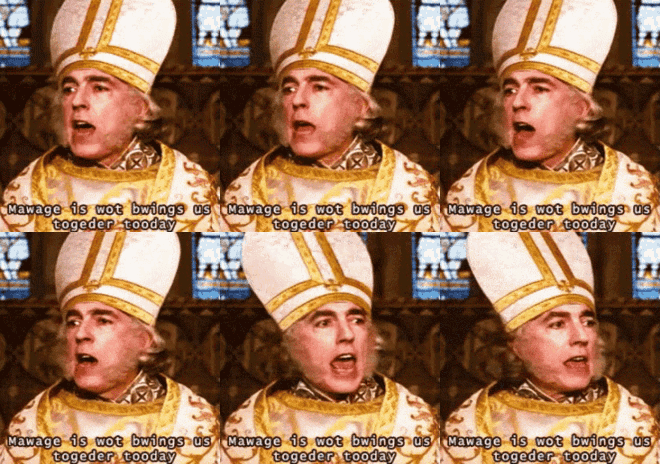
Mawage, Mawage is wot bwings us together today. Mawage, that blessed awangement, that dweam wifin a dweam. And wuv, tru wuv, will fowow you foweva. So tweasure your wuv.
What is marriage? Who is it between? What is it purpose?
Questions that now seem complex although they were all to simple for most of history. Each of these questions and their answers all seem to have political and ideological connotations now. So let’s approach it from a functional sense.
Marriage has long been considered fundamental in community building. Throughout history, communities have been formed by married couples who raise children together. The presence of two parents in a child’s life, each bringing their unique perspectives and roles, has often been seen as beneficial for the child’s development. However, even before considering the aspect of raising children, the establishment of the institution of marriage itself requires certain social conventions.
In contrast to the fictional scenario depicted in “The Princess Bride,” where individuals may be kidnapped and forced into marriage, most of our ancestors entered into marriage through more conventional means. When speaking to my grandparents, for example, they often mentioned the importance of ensuring that the person they dated had stable employment and owned a car. In the generation of my great-grandparents, factors such as the communities individuals came from, societal expectations, and cultural norms played a significant role in determining whom one could or should date. Additionally, the duration of the courting period was often a consideration, as it reflected the seriousness and commitment of the relationship.
Taking a functional perspective, we can understand marriage as a primary social institution that serves several purposes in community building. It provides a framework for establishing committed partnerships, fostering stability, facilitating the formation of families and providing the basis for the best support system for childrearing, a connected extended family. The social conventions surrounding marriage, such as employment and societal expectations, have historically contributed to the maintenance of social order and cohesion within communities. While societal norms and expectations have changed over time, the functional role of marriage in community building remains an imperative.
The discussion now focuses on the interplay between marriage and the community, rather than delving into the morality and ethics of shifting societal norms in recent generations. In this context, the term “community” refers to the individuals who attend a wedding, appear in wedding photos, and express happiness for the couple. However, an issue arises when these same individuals, who were once an integral part of the wedding event, become distant figures in the ongoing union known as marriage.
The transition from a wedding ceremony to the reality of married life often involves a shift in the dynamics between the couple and their community. During the wedding, the community plays a supportive and celebratory role, rejoicing in the couple’s union and offering well-wishes for their future. However, as time progresses, the level of involvement and interaction between the couple and their community can diminish. The once-prominent figures in the wedding photos may become distant acquaintances or mere spectators in the couple’s married life.
This shift can be attributed to various factors. In some cases, geographical distance or changes in personal circumstances may contribute to a decrease in regular contact with the community. Additionally, the initial excitement and novelty of the wedding may fade, leading to a natural waning of the community’s active involvement. The couple, too, may become more focused on their own journey as they navigate the challenges and joys of married life.
While it is not uncommon for the community’s role to change over time, the issue arises when there is a sense of disconnect or isolation felt by the couple. They may long for the continued support, understanding, and camaraderie that was prevalent during the wedding celebration. This highlights the importance of nurturing and maintaining strong social connections beyond the wedding event, both within the community and within the couple’s own efforts to foster meaningful relationships.
Ultimately, the interplay between the community and the marriage is an evolving dynamic that requires attention and effort from both sides. Cultivating a sense of community and fostering ongoing connections can contribute to the longevity and fulfillment of a marriage, as the support and engagement of loved ones can provide a valuable foundation of emotional support and shared experiences throughout the journey of married life.
There is a compelling argument that couples need time and space to develop and establish their own identities within the context of marriage. However, it is important to acknowledge that this approach deviates from the traditional practice of mentoring both the husband and wife, guiding them through the process of understanding and modeling their roles. The assumption that individuals will naturally know what is right or how to navigate the complexities of relationships, especially in a context encompassing hormones, sexuality, intimacy, and youth, can be seen as a combination of hubris, neglect, and laziness.
Traditionally, societies recognized the significance of mentorship and guidance in shaping individuals’ understanding of their roles and responsibilities within marriage. Elders, experienced couples, and the broader community played an active role in imparting wisdom, providing advice, and setting examples for newly married couples. This mentoring process served as a valuable resource for young couples, offering insights and guidance on matters related to communication, conflict resolution, emotional intimacy, and the intricacies of a committed partnership.
In the present era, the emphasis on individualism and personal autonomy has led to a shift away from the structured mentorship model. Many couples are encouraged to discover their own paths and define their roles without extensive external guidance. While this approach promotes independence and self-discovery, it can also neglect the importance of collective wisdom and communal support in navigating the challenges and nuances of a successful marriage.
Expecting individuals to instinctively grasp what is right or to effortlessly navigate complex relationship dynamics may be unrealistic. The primordial mix of emotions, desires, and youth can create a volatile environment where guidance and mentorship are invaluable. By neglecting the role of mentors, society risks leaving young couples to stumble through the early stages of their marriage, potentially encountering avoidable pitfalls and challenges.
To strike a balance between individual growth and communal guidance, it is essential to reconsider the value of mentorship within marriage. Encouraging experienced couples and trusted community members to serve as mentors can provide invaluable support for newlyweds. By offering advice, sharing personal experiences, and modeling healthy relationship behaviors, mentors can contribute to the development of strong, fulfilling marriages. Recognizing the complexities involved in navigating intimate relationships and the transitional phase of youth, societies should place renewed emphasis on mentoring couples, allowing for a healthy interplay between personal development and the wisdom of communal support.
It is often overlooked why the ancient tradition of having witnesses for a marriage has persisted throughout history. Some may assume that witnesses are simply present to substantiate and confirm the occurrence of the marriage and the consent given by both parties. While this practical aspect of having witnesses for confirmation holds true, there is a deeper significance to their role. Witnesses are meant to serve as guardians for the married couple, protecting them not only from each other but also from their own destructive thoughts, patterns, innate tendencies, and learned behaviors.
Marriage is a profound union that involves two individuals intertwining their lives, emotions, and vulnerabilities. It is a journey that requires continuous support, guidance, and accountability. The presence of witnesses signifies a commitment from the community to stand alongside the couple, serving as protectors and mentors in their marital journey.
Witnesses, ideally chosen from those who care deeply for the couple, play a crucial role in holding them accountable to their vows and commitments. They provide a source of guidance and wisdom, offering a perspective beyond the immediate emotions and challenges that may arise within the marriage. By acting as guardians, witnesses help the couple navigate the complexities of their relationship and prevent them from succumbing to self-destructive behaviors or negative patterns that could harm their bond.
In addition, witnesses act as a source of external affirmation and encouragement for the couple. Their presence and support serve as a reminder that the couple is not alone in their journey. They provide a sense of community, reminding the couple of the collective wisdom and experience that surrounds them. It is essential to recognize the significance of witnesses beyond their role as mere confirmers of the marriage. They are entrusted with the responsibility of safeguarding the well-being and growth of the couple, fostering an environment of love, trust, and accountability. Their presence symbolizes the interconnectedness of individuals within a community and reinforces the importance of collective support in sustaining and nurturing healthy marriages.
In today’s fast-paced and individualistic society, the role of witnesses in marriages has somewhat diminished or been overshadowed. However, revisiting the essence of this ancient tradition can remind us of the importance of communal involvement and guidance in sustaining strong and fulfilling marriages.
*WHY DO WE ALWAYS THINK WE KNOW BETTER THAN THE PAST?* (Perhaps it’s the curse of youth and lazy parenting.)
The issue arose when the role of witnesses and participants in a wedding ceremony became merely ceremonial. Many individuals attending weddings started focusing solely on the perks of free food, drinks, music, and good vibes, rather than recognizing the deeper meaning behind the exchange taking place. In essence, by partaking in the celebration, there is an unspoken agreement that you owe a duty to the bride and groom to support and encourage them in their commitment to be the best versions of themselves within the sacred unity they have entered into with each other and a higher power they believe in.
Attending a wedding goes beyond simply enjoying the festivities; it involves embracing a responsibility to uplift and guide the couple in their marital journey. The exchange of food and drinks symbolizes a bond of mutual support and accountability. By accepting the hospitality of the couple, guests are, in turn, expected to play an active role in helping the newlyweds navigate the challenges and joys of their union.
This duty extends beyond the wedding day itself. It requires actively pushing the couple to grow, thrive, and honor the vows they have taken. It entails encouraging them to uphold their commitment to each other and reminding them of the sacred nature of their union. By fulfilling this duty, witnesses and participants contribute to the long-term success and happiness of the couple, fostering an environment of love, respect, and personal growth. It is important for both guests and the couple themselves to remember the significance of the exchange that takes place during a wedding ceremony. Beyond the celebration, there exists a profound commitment and a sacred bond that calls for ongoing support, guidance, and encouragement. By upholding their duty, witnesses and participants contribute to the transformative power of marriage, nurturing a strong foundation for the couple’s lifelong journey together.
The oversight of the duties owed to the couple by witnesses and participants in a wedding ceremony may be attributed to a lack of emphasis and communication within communities. Perhaps this oversight took place because the obligation was not something often portrayed in movies. But it is more likely that communities forgot to take about it. The focus on the superficial aspects of the celebration, rather than the deeper commitments and responsibilities, has overshadowed the true essence of a wedding. It is crucial to remember that supporting the couple, providing guidance, and nurturing their growth is an integral part of the wedding journey. Restoring the understanding of these duties is essential in ensuring a meaningful and transformative marital experience.
This structure was intended to serve as the foundation for building families. The designated witnesses acted as guardians, while the officiator assumed the role of a high counselor. When spouses encountered internal issues, they sought guidance from their chosen witness, who shared their values, to gain perspective, address concerns, or find a healthy outlet. The officiator, as the judge and mediator, resolved conflicts, not just determining who was right, but also providing guidance on what each party needed to do to restore harmony. By respecting the officiator’s role in the marriage ceremony, their decisions held authority. Without this structure, couples risk ongoing disputes or allowing issues to fester, akin to an untreated, festering wound. Either they painstakingly address and resolve the issues or they risk the consequences of an unresolved rupture.
To say the least, this structure was nonexistent, in many (failed) marriages. There are numerous reasons for the breakdown of communities and structures, which I attempt to address in my other pieces. I cannot pinpoint the initial domino, but these were once upright dominos firmly interlocked.
However, in the absence of these structures—whether it be family, friends, religion, or community—the mundane and inherent conflict of opposing forces attempting to unite can result in leakage. Without a robust structure to offer external support when needed, the united forces redirect their energies towards a civil war instead of conquering the world together.
As communities started to crumble and shifted their focus towards the nuclear family and secularism, and as the “great society” disrupted traditional roles within communities, the integrity of marriages weakened. It is difficult to determine which came first—the weakening of communities or marriages. However, this collapse led to a devastating divorce rate that coincided with the decline in intentional dating, marriages and people having children, though admittedly there are other factors. Unfortunately, the decline did not stop there.
The Age of Dating with a Vague Purpose
As mentioned earlier, dating used to serve as the pathway to marriage, and it still does in the Western world, even in modern “arranged marriages.” However, the concept of arranged marriages has evolved. It is no longer about trading one’s daughter for a goat; instead, it involves going through a matchmaker who assesses your personality, values, and interests to find a compatible match. The matchmaker system goes beyond superficial traits and delves into the core values, ensuring that potential matches already demonstrate compatibility on a fundamental level. Thus, even within the context of dating for personality or love, there exists a structured approach that does the groundwork of assessing compatibility based on shared values.
Then the shift in communities and traditions of marriages was weakened by modernity. The shift in dating dynamics led to individuals pursuing relationships with the indirect goal of eventually reaching the right place, but lacking clear guidance on how to navigate the process. Parents and communities often failed to provide comprehensive guidance beyond superficial criteria like looks, wealth, and emotions. Consequently, the focus shifted towards the vague objective of seeking marriage and starting a family, without a structured roadmap or step-by-step goals that are essential for long-term endeavors.
In the modern era, the shift in dating has resulted in a common response when asked about dating preferences: “I’m looking for a connection, love, or a good vibe.” However, this approach often resembles fishing, using one’s physical appearance as bait. People are uncertain if they are caught in someone else’s grasp or if someone else is caught in theirs until months or even years later, once the initial allure of pheromones and primal instincts fades away.
In contrast, the traditional model of dating prioritized discovering shared values as the primary objective, with compatibility and mutual understanding considered secondary to the alignment of core principles.
However, since the latter half of the 20th century, the focus in dating has shifted towards a more feelings-based approach. The emphasis became centered on whether a person makes you feel good, gives you butterflies, and creates a sense of specialness or love. Yet, these factors hold little consequence if the individuals involved do not share similar values.
When we speak of similar values, we refer to the presence of reconcilable differences and a shared understanding of how life should be lived. It means that both individuals can make slight adjustments to their viewpoints without feeling inauthentic. Alternatively, one of the parties may reframe their prior beliefs to align with the collective direction the couple wishes to move forward in their familial unit.
However, in a society where only a nuclear family or a partially extended family exists, and genuine community connections are lacking, external guidance becomes minimal due to physical distance or a new norm of hiding problems from potential helpers. Uncomfortable conversations, necessary for addressing any issues, are often avoided. Instead, individuals turn to television, radio, or sports to distract themselves.
As a result, when seemingly irreconcilable topics arise, couples rarely have experience working together to find healthy resolutions. Their values were never thoroughly discussed or prioritized in the relationship; instead, good feelings took precedence, making negative emotions the moral enemy of their relationships. Most significantly, they lacked a “higher authority” to turn to for guidance, someone who could help resolve conflicts without assigning blame to individuals but instead referring to established order, rules, or customs that explain the reasons behind the conflicts.
Without the support of an extended family or community leaders who could mediate such disputes, which arise in almost all marriages, the weakest marriages that failed to establish a solid foundation or closed themselves off from much-needed assistance found themselves in dire straits.
At the very least, individuals in this stage had a vague understanding that they wanted to find a partner with whom they could marry and start a family. Although the specifics may not have been discussed thoroughly, intuition, social conditioning, or outside influences guided them towards something difficult to articulate. Nevertheless, there was an underlying, unconscious goal that provided purpose and meaning, regardless of the unpredictable nature of the path it led them on.
Dating with No Purpose: Relationship Masturbation
Masturbation, beyond its literal definition, involves using something of inherent value solely for the purpose of self-gratification. It manifests in various forms: physical masturbation, often discovered during adolescence; verbal masturbation, where individuals gather to use words to boost their own ego; and relationship masturbation, both platonic and “romantic,” where people seek validation from one another without actively pushing each other towards their ideals or striving for personal growth within their shared value system.
Now the Etymology of the word “date”.The word “Date” derives from the Latin root “dare,” meaning “to give or deliver,” and the root “data,” which encompasses qualities, characteristics, or symbols. When combined, the concept of dating implies exchanging information about oneself with the other person who is also doing the same. Therefore, if one engages in casual dating without a serious intent, they are essentially undervaluing and giving away their true self for fleeting enjoyment. This pursuit of short-term pleasure can have lasting effects on both male and female psychology, influencing their perception of risk, reward, pleasure-seeking, and avoidance of pain.
However, rather than coming across as prudish, the government began to encourage and subsidize this behavior. There’s an old saying that trends usually start at the bottom and emerge out of necessity. However, it’s when influential individuals with money start imitating these behaviors that they become popularized, leading more people to adopt them.
It is argued that aimless dating has always existed among the upper echelons, but the difference lies in the fact that if individuals of status made a mistake, they often had obligations towards the child and maintained their marital duties. However, the concept of single individuals dating without specific goals emerged and gained momentum through welfare programs.
In my article on The Ethos of the Great Society, I touched upon the general aspects of the programs. Amongst other things it discusses the roles created by subsiding many lifestyles which in turn created a new form of clientelism. In next week’s article, I will provide a more detailed analysis of the government programs that discouraged and sometimes even financially penalized couples for getting married or living together.
End of Part 1
 The Wall